LuckyWins Registration Australia: Account Setup, Login and Verification
 Available in US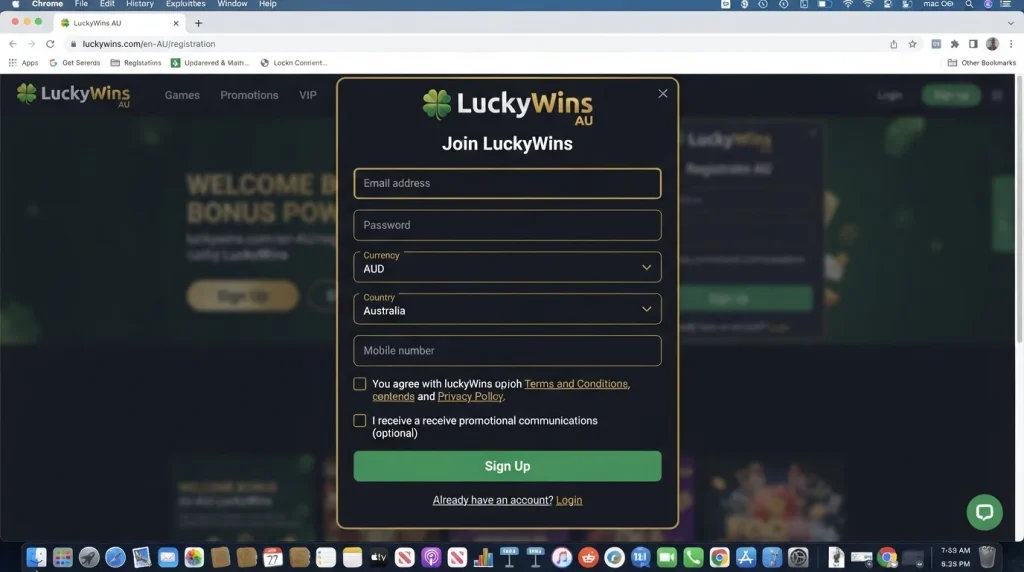
LuckyWins presents an Australia-localized site and an account journey built around personal registration, login, deposits and later identity checks when required. The visible AU-facing presentation is useful evidence that LuckyWins targets Australian visitors, but it is not a guarantee that every Australian resident will be accepted. The current terms say players must be in a jurisdiction where online gambling is legal and must meet the applicable age requirement, while Australia is not listed in the operator’s current general restricted-country list.
At account level, the practical sequence is straightforward: create one personal account, provide accurate identity and contact details, keep login credentials private, choose payment options only after the account is active, and be prepared for KYC before a withdrawal or whenever the operator requests verification. The important distinction is between seeing an AU signup path and successfully completing all eligibility, account and verification checks.
Table of Contents
- What the LuckyWins signup journey requires at a high level
- AU localization does not equal guaranteed acceptance
- Use accurate legal-name and address data from the start
- One personal account is the safest reading of the rules
- Login security is part of account compliance
- What happens after registration
- When KYC enters the account journey
- Age and identity checks are not optional account details
- Choosing a bonus is a separate decision
- A practical registration checklist
- What to do if registration or login fails
- Australian regulatory status is a separate layer
- What successful registration does – and does not – mean
- LuckyWins Registration Australia: Account Setup, Login and Verification
What the LuckyWins signup journey requires at a high level
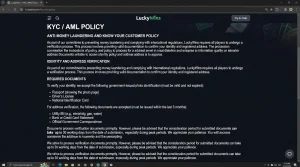
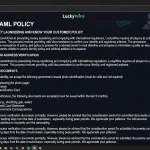
The current LuckyWins KYC policy sets out the core personal information connected with player registration. It lists date of birth, first and last name, full residential address and a valid email address. It also requires valid identification showing that the player is over 18 or over the applicable legal age in the jurisdiction of residence.
That means registration should be treated as an identity-linked account process rather than a disposable username. The details entered at signup can later be compared with identification documents and payment information. Using a shortened name, an old address or details that do not match your documents can create avoidable friction when verification starts.
The operator also says an individual must register personally. In practical terms, the account should be created and controlled by the person who will use it, rather than by a friend, household member or third party.
AU localization does not equal guaranteed acceptance
The presence of a dedicated Australia-localized site is a meaningful product signal. It shows that LuckyWins presents content specifically for an Australian audience. Australia is also absent from the current general real-money restricted-country list in the operator’s terms.
Those facts do not create a guarantee that a registration attempt will be accepted. LuckyWins’ terms place responsibility on the player to meet jurisdictional eligibility requirements, and the operator can conduct identity, contact and other checks. An account journey can therefore stop or be restricted even when the signup interface itself is visible.
This evidence boundary is worth keeping clear. A visible registration form proves that a signup path is presented. It does not prove that every address, payment method, identity profile or jurisdictional case will pass the checks applied after submission.
Use accurate legal-name and address data from the start
One of the most useful ways to reduce later verification friction is to enter information exactly as it appears on your current documents. The KYC policy says false, incomplete, inaccurate or misleading information can lead to account action. It specifically links registration data with passport or identification data.
For an Australian user, that means using your full legal name rather than a nickname, a current residential address rather than a mailing shortcut, and an email address you control. Date of birth should also match the identity document you would use if verification is requested.
Consistency matters because account data is not isolated from the cashier. If a payment method carries a different name or if the address on a proof-of-address document does not match the account, the operator can ask for clarification or additional evidence.
One personal account is the safest reading of the rules
LuckyWins’ current terms state that each person may register and maintain one personal player account. They also describe duplicate-account controls that can take household, residential address, IP address or device sharing into account.
This is particularly relevant for households where more than one adult uses the same internet connection or device. A shared IP does not automatically mean wrongdoing, but it can be one of the signals considered by duplicate-account systems. If two legitimate users in the same household plan to create separate accounts, support is the sensible route for clarifying how the operator wants that situation handled.
Opening a second account to work around a login problem, bonus restriction or verification delay is a poor fix because it can create a duplicate-account issue on top of the original problem.
Login security is part of account compliance
After registration, the account becomes the control point for personal data, balances, bonuses and payment activity. LuckyWins’ terms say login credentials should not be shared and the account is for personal use.
Use a unique password and keep access to the registered email secure. If the operator sends verification or recovery messages, losing control of the email address can make a simple login issue much harder to resolve. Avoid saving credentials on a shared public device and sign out when another person could access the browser.
If you cannot access the account, use the operator’s support and recovery route rather than opening another account. LuckyWins offers 24/7 support including live chat, so an access problem can be raised without creating conflicting account records.
What happens after registration
Once an account is active, the next practical step is usually the cashier. The exact deposit method available can depend on the live account view, currency and payment route. The broader LuckyWins payments guide covers the Australia-facing deposit options and the difference between method availability and guaranteed acceptance.
Do not treat a successful deposit as proof that verification is complete. Deposit processing and identity verification are separate controls. LuckyWins can still request KYC later, including before a withdrawal. This separation is common in account journeys because the operator may apply checks when risk, payment ownership or cash-out activity creates a reason to verify the account more closely.
For that reason, it is better to think of registration as the start of the account lifecycle, not the end of compliance checks.
When KYC enters the account journey
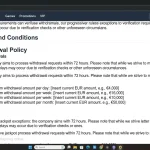
LuckyWins says it can conduct verification checks at its discretion or when required by third parties or regulatory obligations. The current terms also connect KYC directly with withdrawals: a withdrawal can remain pending until required verification steps are completed.
The dedicated LuckyWins KYC guide explains the current document categories, possible additional checks and the published consideration window. For registration purposes, the key point is simpler: have identity and address evidence ready before you need a time-sensitive cash-out.
KYC should not be confused with creating a second account or changing details after the fact. If information changes, use the account or support process intended for corrections so the stored profile and the evidence you submit remain consistent.
Age and identity checks are not optional account details
The current KYC policy requires date of birth together with valid identification showing that the player is over 18 or meets the higher applicable age requirement in the jurisdiction of residence. The terms also allow the operator to suspend or close an account when age cannot be established.
This makes age data fundamentally different from a marketing preference or optional profile field. It is part of eligibility. Entering a false date of birth can create a direct conflict with the document used later for verification.
The safest approach is to assume that any core identity field may eventually need documentary support. That mindset makes registration slower by only a few seconds but can prevent much larger delays later.
Choosing a bonus is a separate decision
Registration and bonus selection often appear close together in the user journey, but they answer different questions. Account creation establishes the player profile; a promotion adds its own eligibility, deposit, wagering and expiry rules.
Do not choose a promotion only because it is shown near signup. Read the current LuckyWins bonus terms before depositing if the offer matters to your decision. Duplicate-account rules and country-specific promotion restrictions can also affect bonus eligibility independently of whether the account itself exists.
Keeping these decisions separate helps avoid a common mistake: assuming that being allowed to create an account automatically means every advertised promotion is available on identical terms.
A practical registration checklist
- Use your full legal name and current residential address.
- Enter a date of birth that matches your valid ID.
- Use an email account you control and can access long term.
- Create only one personal player account.
- Keep login credentials private and avoid shared-device credential storage.
- Check the live cashier before assuming a payment method will be available.
- Keep ID and proof-of-address documents available for later KYC.
- Contact support rather than opening a duplicate account if login or verification fails.
This checklist does not guarantee approval. It simply aligns the information you provide at signup with the data LuckyWins says it can later verify.
What to do if registration or login fails
A failed signup can have several causes: account data may already exist, a duplicate-account rule may be triggered, an eligibility check may fail, or a technical issue may interrupt submission. A login failure can also be as simple as an incorrect password or inaccessible email address.
Start by recording the exact error message and the stage at which it appeared. Do not repeatedly create new accounts. If the issue relates to personal data, explain which field may be wrong and ask support what evidence is needed to correct it.
LuckyWins offers 24/7 support including live chat. That route is more useful than guessing because support can distinguish an access problem from an account review or verification request.
Australian regulatory status is a separate layer
Account presentation and Australian regulatory authorization are different questions. LuckyWins can present an AU-localized registration journey without that fact alone establishing an Australian gambling licence or local regulatory authorization.
This registration page focuses on the account process, not the full regulatory picture. If authorization and operator status are important to your decision, use the site’s trust section rather than treating successful access or signup as proof of local licensing.
For the broader product and regulatory context, return to the full LuckyWins review.
What successful registration does – and does not – mean
LuckyWins presents an Australia-localized account journey, and Australia is not named in its current general real-money restricted-country list. Registration still depends on accurate personal information, age and jurisdictional eligibility, one-account rules and any verification checks the operator applies.
The most practical approach is to register once, use details that match your documents, secure the login email and password, and expect KYC to remain part of the account lifecycle even after deposits are possible. If access or account checks fail, use support rather than trying to work around the issue with another account.
That distinction between visible AU signup presentation and guaranteed account acceptance is the key to reading the registration process accurately.